Free template
Managing medication sounds simple until you are doing it for real — several prescriptions, different schedules, one with food and one without, a refill that ran out on a weekend, and a memory that is doing more work than it should.
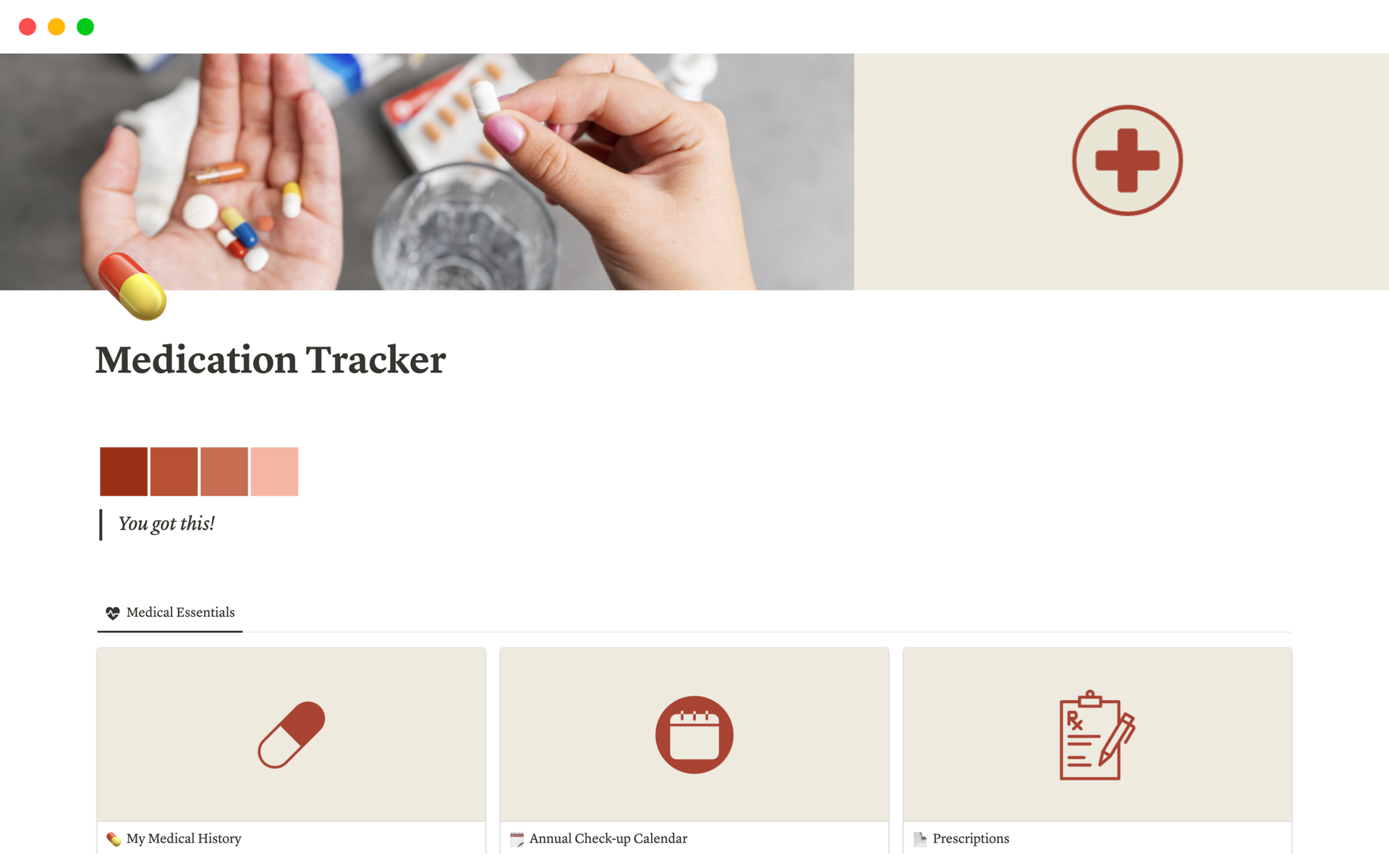
Medication Tracker puts all of it in one organized place: what you take, when, why, and what to watch for. A small amount of structure around something that does not forgive disorganization.
The problem it addresses
Medication management lives mostly in the head, and the head is a poor place for it. Doses get doubled or missed, refills run out unnoticed, and side effects go unconnected to the drug that caused them because no one was keeping track. Carelessness has little to do with it. These are the predictable results of holding too many moving details with no system.
The problem multiplies when you are managing medication for someone else, or several someones, or coordinating across more than one prescribing doctor who may not see the full picture.
What’s inside
- A central medications database capturing names, dosages, and frequencies, so the full regimen is visible at a glance rather than scattered across bottles.
- Side effects and food requirements, recorded alongside each medication, so patterns become noticeable and instructions are not forgotten.
- Prescribing doctor and pharmacy details, kept with the medication they belong to.
- Refill tracking and status, so you see what is running low before it runs out.
- Personal notes and reminders for the specifics that matter to your particular situation.
It is deliberately straightforward. A tool like this earns its keep through reliability, not features.
Who it’s for
Anyone managing more than a single simple prescription: people with chronic conditions juggling several medications, caregivers responsible for a parent’s or partner’s regimen, anyone coordinating across multiple doctors. It suits people who want one clear record they can update easily and bring to an appointment.
A necessary note: this is an organizational tool rather than medical advice. It helps you keep track — it does not replace your doctor or pharmacist, and any change to your regimen belongs with them.
A closing thought
The value of keeping a clear medication record shows up most in the moments you cannot plan for: a new doctor who needs the full list, a side effect you would otherwise struggle to explain, a question at the pharmacy you can now answer precisely. Having one trustworthy place for all of it reduces the daily mental load and makes you a better-informed participant in your own care, or someone else’s. That clarity, quietly available when it matters, is what this tracker is built to provide.