Free template
The memories a family treasures most are usually the ones no one thought to write down — a small joke that became permanent, the way a grandparent told a story, an ordinary afternoon that somehow stayed bright for decades.
Family Memories Diary is a place to catch those moments while the details are still warm, before they soften into the vague glow of something half-remembered.
The problem it addresses
Photos capture how a moment looked. They rarely capture what was said, why it mattered, or how it felt — and those are the parts that fade first. Within a few years the description blurs, the quote is gone, and the memory survives only as an image with no story attached.
The second problem is concentration of memory. A family’s history often lives in one person’s head. When that person is unavailable, the record they carried goes with them. A shared place to keep memories spreads that responsibility across everyone.
What’s inside
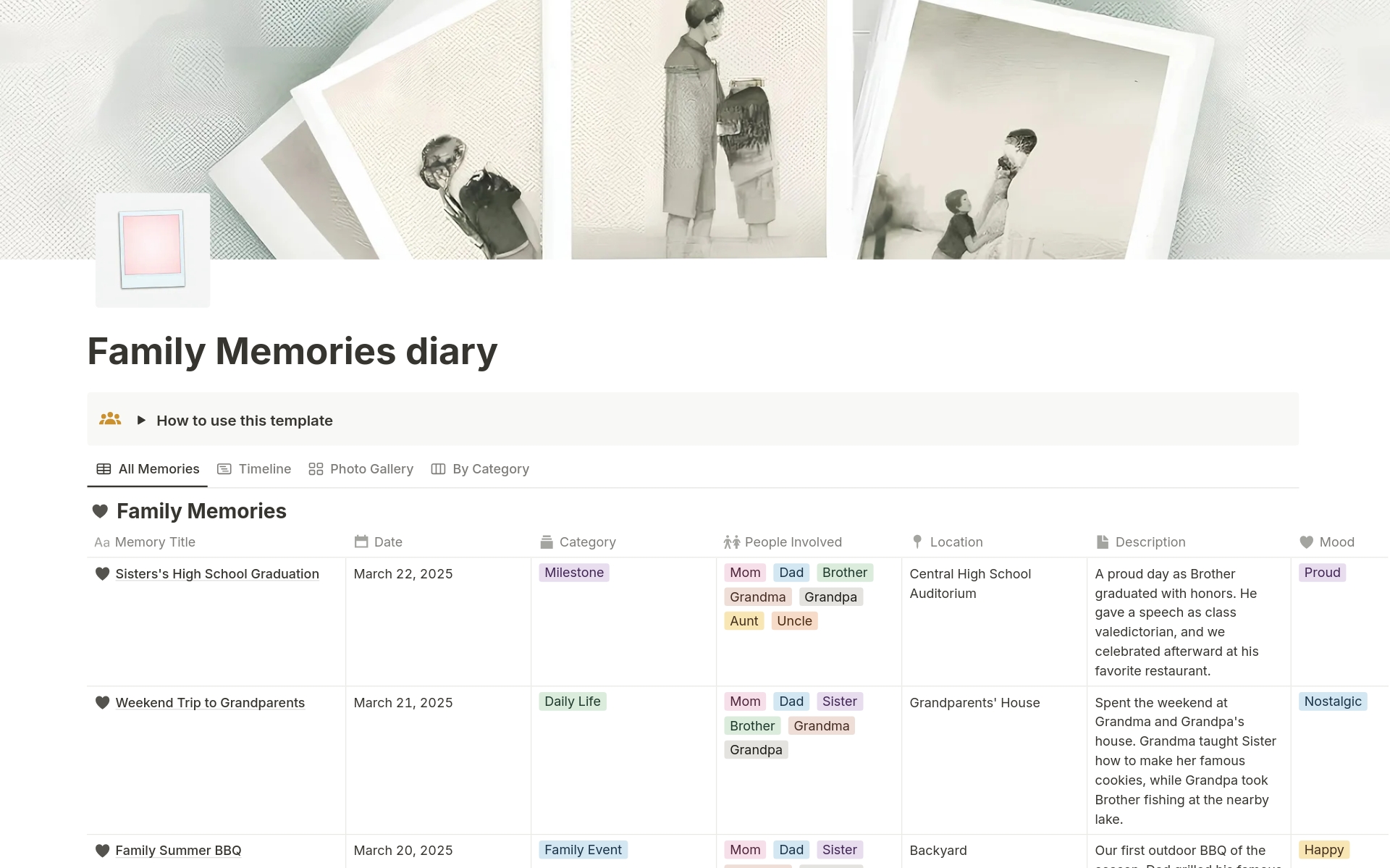
- A structured memory database with fields for the title, date, category, people involved, location, a full description, and the mood of the moment — enough to make a memory findable later rather than merely stored.
- Photo space and tags, so visual documentation and themed collections (holiday traditions, milestones, vacations) live alongside the words.
- Multiple views — by person, by year, by location, by mood, and a calendar view — so the same archive can be read in whatever way the moment calls for.
- Guidance on capturing sensory details and quotes, the small specifics that make an entry feel alive rather than administrative.
It is built to be shared, so different family members can add their own perspective on the same shared experience.
Who it’s for
Parents documenting their children’s growing up, families who gather and reminisce and wish they had kept more, anyone who has felt a good memory start to slip and wanted to pin it down. It works as a private diary and as a collective family archive that several hands build together.
It rewards small, regular additions far more than occasional ambitious ones. A weekly entry outpaces a once-a-year attempt to remember everything.
A closing thought
We tend to assume we will remember what matters. We remember less than we expect, and we remember it less accurately than we believe. Writing a memory down is partly for the future — a record for the people who come after — but it does something in the present too: the act of describing a moment makes you notice it more fully while you are still inside it. This diary is built for both gifts, the one you keep now and the one you leave behind.