An event tends to reveal its weak spots at the worst possible moment — the afternoon before doors open, when there is no time left to absorb a surprise.
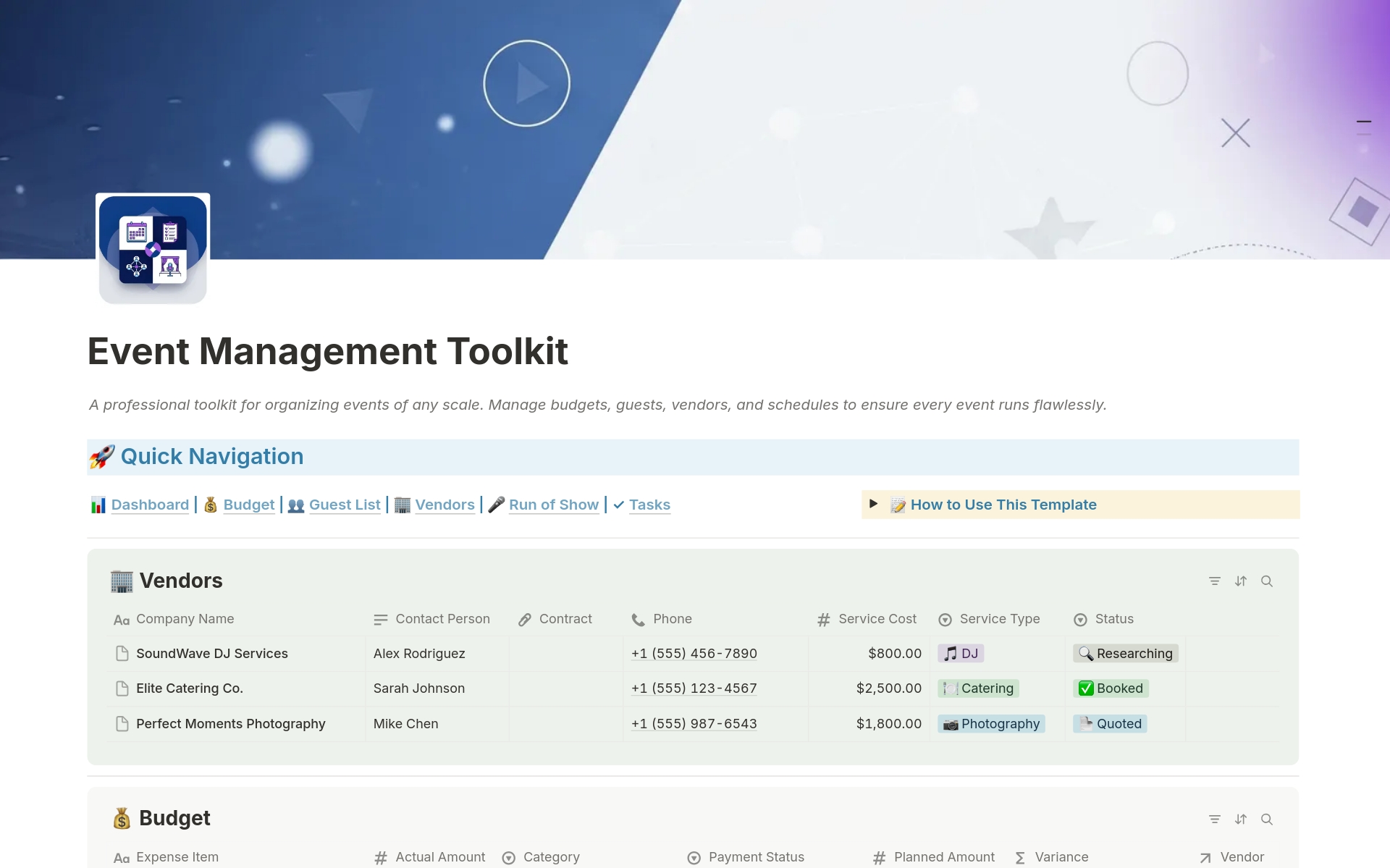
This toolkit exists for the stretch of work that happens before anyone arrives. It gathers the moving parts of an event into one place, so the budget, the guest list, the vendors, and the minute-by-minute schedule stop living in separate files and separate heads.
Where most events lose their footing
The early planning usually feels manageable. Trouble accumulates quietly: a vendor quote that never made it into the budget, an RSVP that arrived by text and was forgotten, a timeline that everyone assumed someone else was holding. By the time these gaps surface, they overlap, and the cost of fixing one tends to disturb another.
Most organizers know this from experience. The work is rarely hard in any single moment. What makes it hard is keeping all of it visible at once, especially when several people touch the same event.
What’s inside
- Dashboard. A single view of the numbers that matter: budget planned against actual, and the current split of attending, declined, and pending guests.
- Budget. Categories with planned and actual amounts, variance, and payment tracking. It links to vendors, so a booking and its cost stay connected.
- Guest List. RSVPs, dietary needs, and seating, in a form you can export for name tags and table assignments.
- Vendors. A small CRM with contacts, contracts, pricing, and booking status, so the people you depend on are documented rather than remembered.
- Run of Show. The event timeline, segment by segment, with durations that calculate themselves and an owner assigned to each moment.
- Task Manager. Preparation work with priorities, deadlines, and assignees, filterable by whoever needs whoever needs their own slice of it.
Each database is built to be duplicated, so a format that worked once becomes the starting point for the next event rather than a thing you rebuild from memory.
Who it’s for
People who carry responsibility for events without a large operations team behind them: in-house coordinators, small agencies, community and conference organizers, anyone who has felt the quiet panic of a detail surfacing too late. It suits one organizer keeping order, and it suits a handful of collaborators who each need their own view of the same plan.
It assumes you already know how to run an event. Its job is narrower — to hold the details steady while you do.
A closing thought
The value of a system like this is easy to underestimate, because its best outcome is something that does not happen: the scramble, the double-booking, the forgotten payment. An event that runs smoothly tends to look effortless, and that impression is usually the product of work no guest ever sees. This toolkit is built for that invisible work — the part that decides whether the visible part holds together.
Free template