Free template
A child’s development is made of moments that feel enormous as they happen and somehow vanish afterward — the first full sentence, the week something finally clicked, the activity that lit them up in a way nothing else had.
This tracker is a place to keep both the activities you do together and the growth those activities quietly produce, so the record outlasts your memory of it.
The problem it addresses
Parenting happens in a blur. Days repeat, milestones arrive without warning, and the details that seem unforgettable in the moment are gone within months. Parents are left with a warm but imprecise sense of how a child is doing, and very little they can actually look back on.
There is also the planning side. Choosing activities that genuinely fit a child’s stage and interests is hard to do well from instinct alone, especially across more than one child. Without any record, you repeat what is easy rather than what is working.
What’s inside
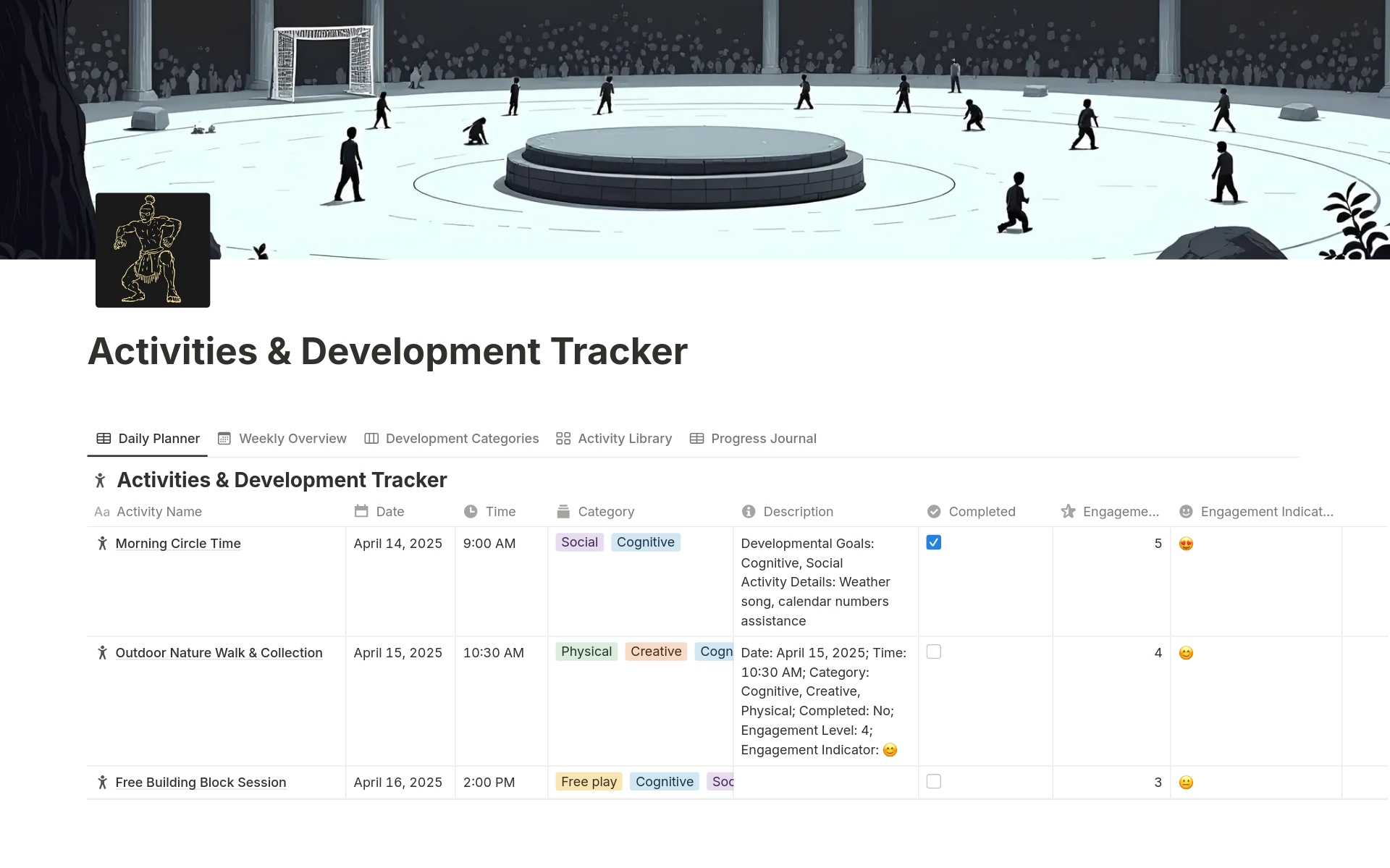
- A single, flexible tracker for the activities you do with your child, designed to double as a developmental log rather than just a schedule.
- Room to capture what an activity involved, how the child responded, and what it seemed to develop — motor skills, language, social confidence, focus.
- The structure to filter and group by child, age, type of activity, or area of development, so patterns in interest and progress become visible over time.
- A format simple enough to update in the small windows parents actually have, rather than one that demands an evening you do not get.
Who it’s for
Parents who want to be a little more intentional without turning childhood into a project: those raising more than one child and trying to give each their due, parents drawn to early learning, anyone who would rather remember this stretch of their child’s life in detail than watch it dissolve. It works for one parent keeping notes and for two sharing the record between them.
It makes no claim to being a curriculum or a developmental assessment: just a private, honest log of what you did and what you noticed.
A closing thought
There is pressure on parents now to optimize everything, and a tracker can easily become one more source of that pressure. Used well, this is the opposite — a way to pay closer attention rather than to measure harder. Noticing that a child lights up around music, or struggled with something one month and not the next, is its own quiet reward, separate from any milestone chart. Years from now the value shifts again: the record becomes a window back into a time that moved too fast to hold. This template is built for both kinds of looking.