Paid template
A missed bill is rarely a money problem. The money was there; the attention was not. It is the late fee on a payment you could easily have made, the small avoidable penalty for simply losing track — and it stings precisely because it was so preventable.
This tracker exists to keep that from happening. It gives your recurring bills and regular expenses one clear home, so nothing slips through for lack of a system.
The problem it addresses
Recurring expenses are deceptively hard to manage because they are spread across time and channels. Different due dates, different accounts, some on autopay and some not, a few that quietly changed amount when you were not looking. Held loosely in memory, this is exactly the kind of information that fails you at the worst moment.
There is also a clarity problem. Most people have only a fuzzy sense of what their fixed monthly obligations actually total — and that number is the foundation everything else in a budget rests on. Without it, financial planning is built on a guess.
What’s inside
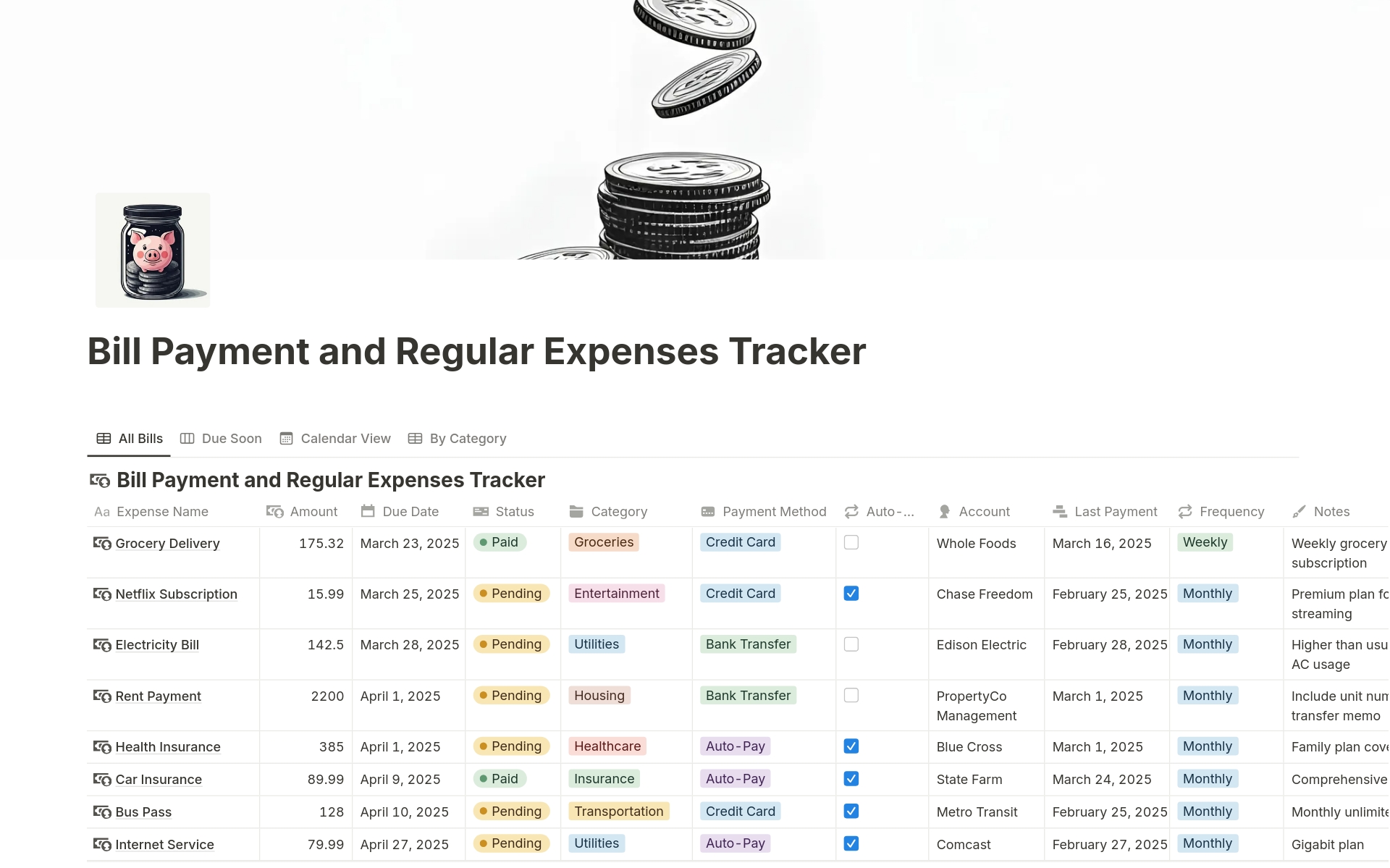
- A central tracker for bills and regular expenses, so every recurring obligation lives in one place rather than scattered across your mind and inbox.
- Room to record the essentials — amount, due date, payment status, and category — so you can see at a glance what is paid and what is pending.
- A clear view of your total regular outgoings, turning a vague sense of “the bills” into an actual figure you can plan around.
- A simple, repeatable rhythm for staying current rather than reacting to whatever surfaces.
It is intentionally focused: one important job, done well, rather than a full budgeting suite.
Who it’s for
Anyone whose recurring expenses have outgrown their memory: people juggling multiple bills and subscriptions, anyone who has been caught by an avoidable late fee, anyone who wants to know their true fixed monthly costs before doing any further financial planning. It suits people who want order and visibility more than elaborate analysis.
It is an organizing tool rather than financial advice. It shows you your obligations clearly — what you do with that clarity is yours to decide.
A closing thought
There is a quiet form of financial stress that has nothing to do with how much you earn — the low background hum of not being quite sure what is due, when, or whether you handled it. That uncertainty costs more than the occasional late fee; it taxes your attention every time a bill crosses your mind. Simply seeing your obligations laid out clearly tends to dissolve a surprising amount of that stress, replacing a nagging vagueness with a settled sense of control. This tracker is built for that calm — the kind that comes from knowing exactly where you stand.