Free template
Most readers cannot say what they read two years ago, or what they thought of it. The books pass through, leave a faint residue, and merge into a vague sense of having read — which is a strange fate for something we gave so many hours to.
My Books Checklist is a simple remedy: one clean place to track what you have read, what you are reading, and what you mean to read next.
The problem it addresses
Reading is an investment of time we rarely account for. We finish a book, feel briefly changed by it, and then watch the specifics fade — the argument, the passage that struck us, even the verdict. Without a record, a year of reading becomes a blur, and the lessons we meant to keep slip away with the details.
There is also the chaos of the to-read pile. Recommendations arrive from everywhere — a friend, an article, a half-remembered mention — and scatter just as fast, so the book you most wanted to read is the one you cannot recall when you next have time for one.
What’s inside
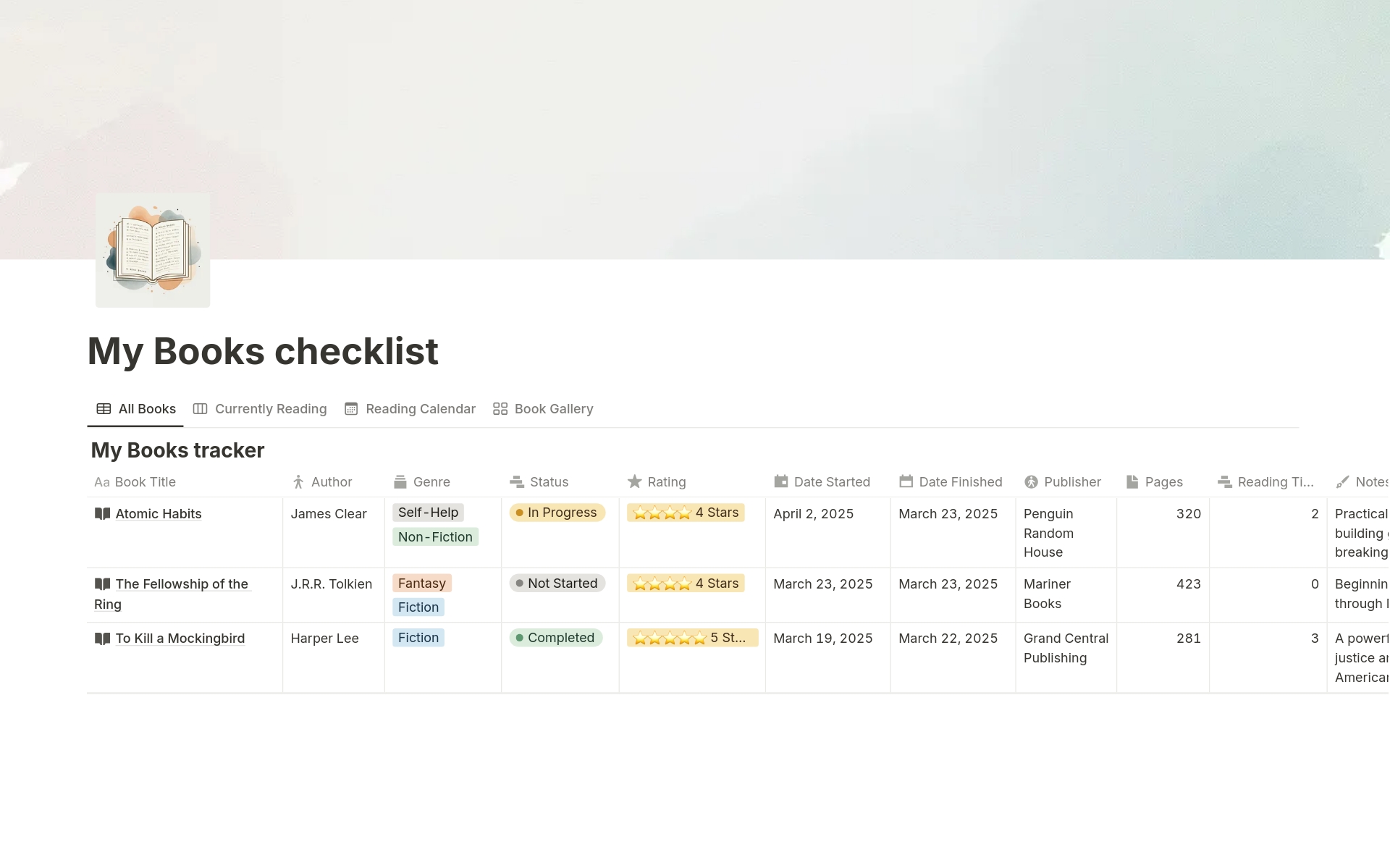
- A central reading tracker covering the full cycle — want to read, reading, finished — so your reading life sits in one view instead of in fragments.
- Room to capture the details that make a record worth keeping: ratings, notes, and the thoughts a book left you with.
- A reliable home for the to-read list, so recommendations are saved the moment they arrive rather than lost.
- A format clean enough to maintain without it becoming a project of its own.
It is deliberately uncomplicated. The point is to read more and remember better, without ending up administering a library.
Who it’s for
Readers who want their reading to add up to something: people who finish many books but retain little, anyone tired of forgetting what they thought of a book they loved, anyone whose to-read list lives in five different places. It suits the steady reader more than the occasional one.
It does not recommend books or connect to a store. It is a private record of your own reading, kept the way you want it.
A closing thought
There is a quiet argument that the value of a book is realized mostly after the reading — in the thinking it provokes, the idea you carry forward, the line you return to. A book finished and forgotten gave you an experience; a book finished and noted can keep giving. Writing down even a sentence about what a book meant changes your relationship to your own reading, making it cumulative rather than disposable. That shift, from passing through books to building something from them, is what this tracker is built to support.