A manuscript is rarely abandoned in a single decision. It fades through small losses — a character whose eye colour changed between chapters, a plot thread no one can find again, a week where the writing simply stopped and no one noticed.
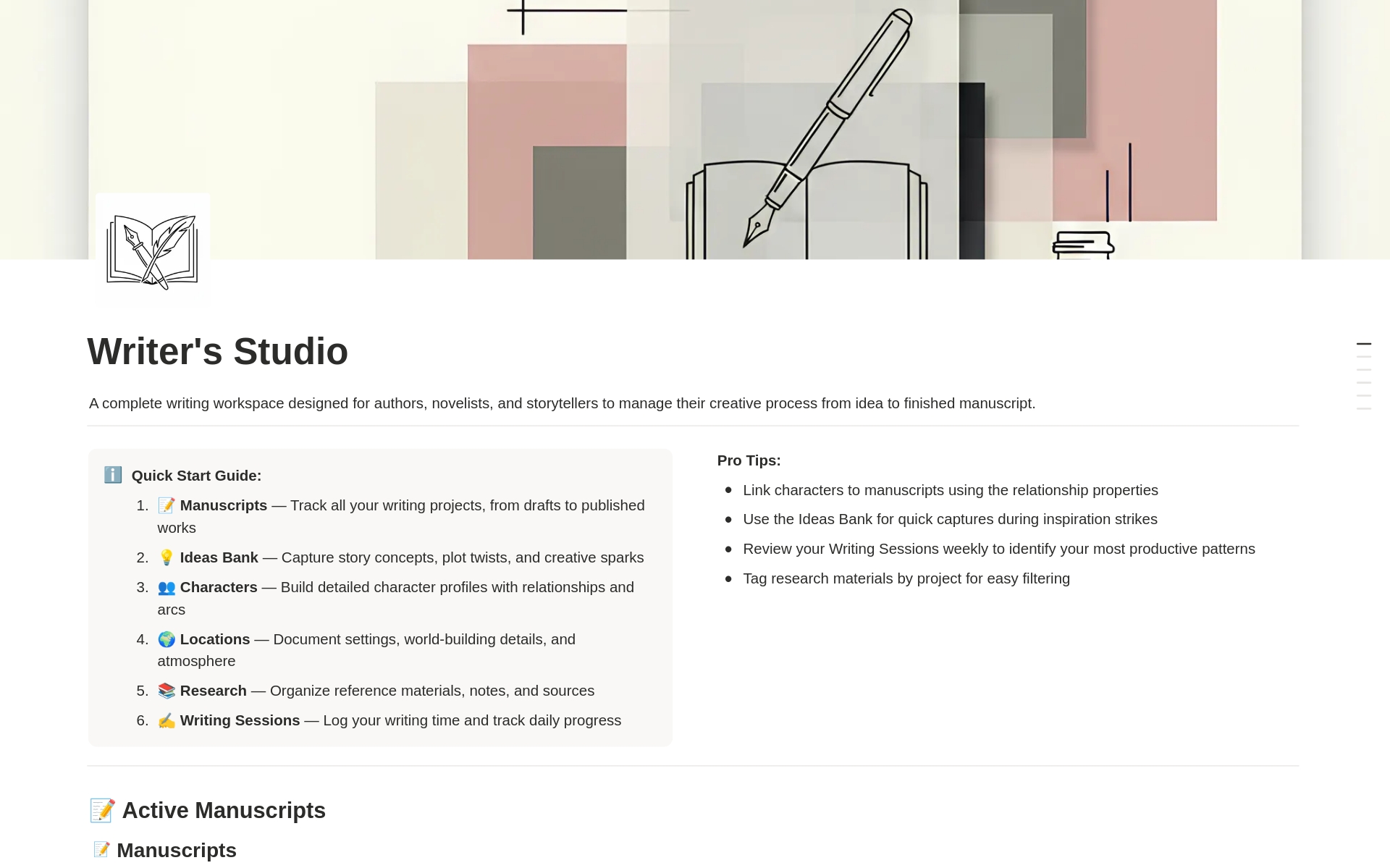
Writer’s Studio is a workspace for the long middle of a writing project, where momentum is fragile and the details multiply faster than memory can hold them.
The problem it addresses
Starting a story is easy. Finishing one means keeping a small world consistent across months of work: who knows what, where things happen, why a scene exists. Most writers improvise this in notebooks, document margins, and the back of the mind, and the system holds until the manuscript grows large enough to outpace it.
The second quiet problem is rhythm. Writing rewards showing up, and showing up is hard to sustain when progress is invisible. A blank page tells you nothing about the thousand words you wrote last Tuesday.
What’s inside
- Manuscripts. Every project tracked from draft to finished work, with status and word-count goals so momentum stays visible.
- Ideas Bank. A place to catch concepts, plot twists, and stray sparks without judgment, then promote the ones worth pursuing.
- Characters. Detailed profiles with relationships and arcs, linked to the manuscripts they belong to.
- Locations. Settings and world-building details, with room for visual references that make a place feel real before you describe it.
- Research. Reference materials, notes, and sources, tagged by project so they surface when you need them.
- Writing Sessions. A log of time and words, built less for accounting than for noticing your own patterns.
The databases link to one another, so a character can be tied to a location, a location to a manuscript, and the world you are building stays connected rather than scattered.
Who it’s for
Novelists, short-story writers, and anyone carrying a project large enough that memory has stopped being a reliable filing system. It fits the writer who wants structure without ceremony — a place to keep the work honest and visible, without turning into a method that demands to be obeyed.
It does not write for you, and it makes no promises about inspiration. It handles the bookkeeping of a story so your attention can stay on the story itself.
A closing thought
There is a familiar idea that creative work and organization pull in opposite directions, that structure dampens the spark. In practice the opposite is often quieter and truer: freedom on the page tends to grow from knowing the scaffolding will hold. When you are not spending energy remembering which version of a scene is current, more of it is left for the writing. That is the trade this workspace is built around.
Free template